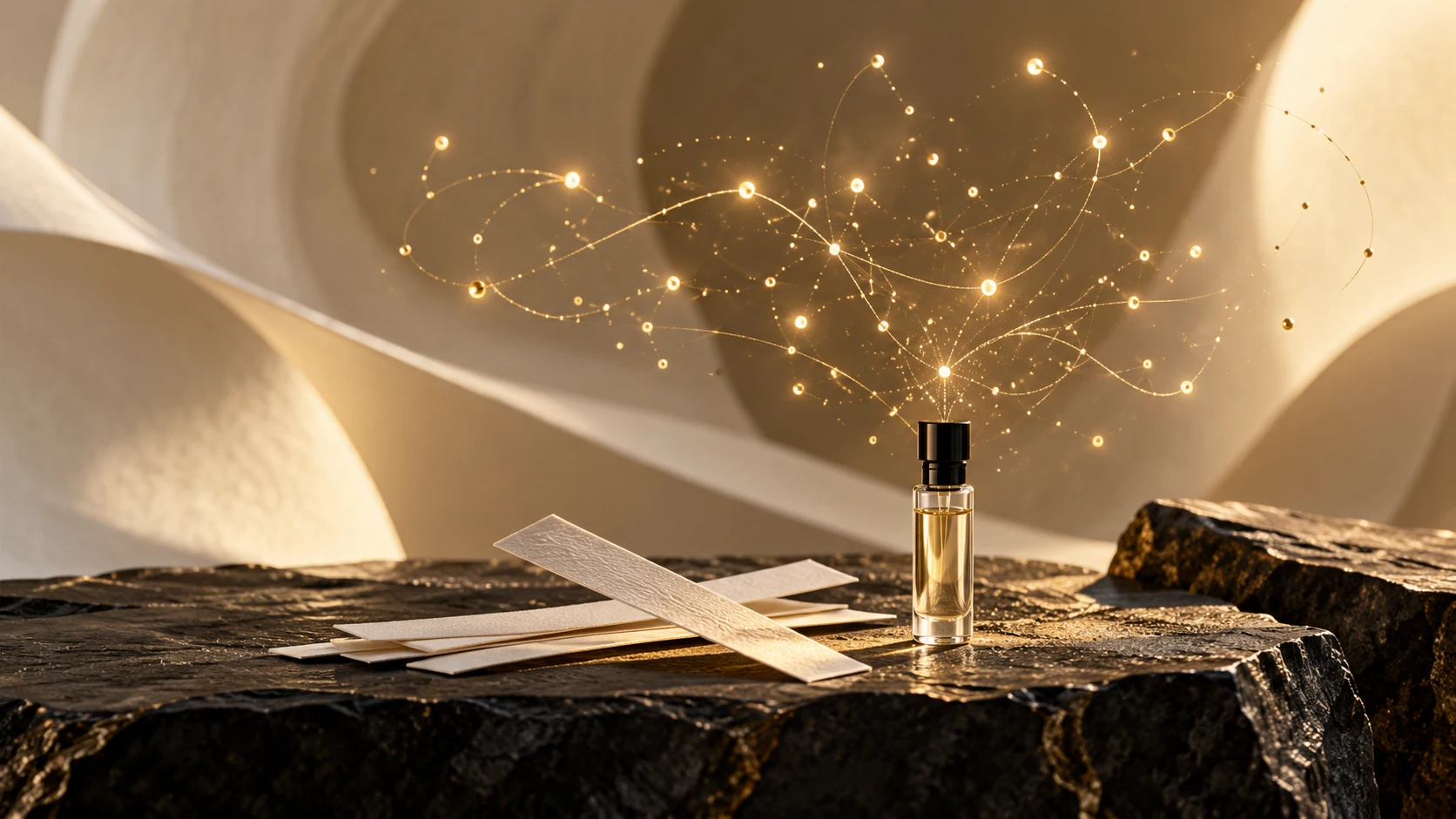
Some of the most interesting AI developments in fragrance happen before a bottle exists. Recent industry research uses models to predict molecules’ scent, taste, stability and sustainability before laboratory work, helping specialists explore possible ingredients. I find that worth watching, especially when the discussion moves beyond novelty and asks what a tool can genuinely contribute.
My view is that a prediction should open a question, not close it. A promising direction still deserves human judgement, careful testing and a clear creative purpose. This is an evolving area of experimentation, not a reason to assume that every perfume is now created in the same way. The distinction matters more than the headline.
Choosing what to wear raises a different question altogether. A suggestion might help you narrow the possibilities, but it cannot decide what you want a fragrance to mean to you. Perhaps you want something familiar; perhaps you are ready for a surprise. I would rather leave space for that uncertainty than turn personal taste into a score.
For me, technology is most interesting when it supports curiosity without taking ownership of the answer. That is how I would approach any fragrance recommendation: as an invitation to explore, not an instruction to follow. If Eden catches your interest, discover its character on your own terms. Your preference does not need an algorithm’s permission.
Discover Eden